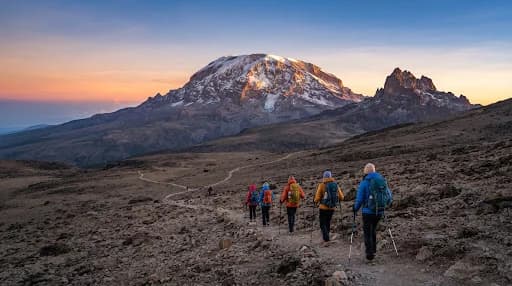
Compare Lemosho, Machame, and Marangu through their daily schedules, camping or hut accommodation, acclimatization time, and the support behind each climb.
The best Kilimanjaro route is a route and schedule that fit your time, comfort preferences, and preparation. Lemosho, Machame, and Marangu offer different experiences, but choosing between them starts with the day-by-day itinerary and the support behind it, not a summit-success headline.
Before you start planning
- Compare the daily itinerary and time for acclimatization, not only the route name.
- Marangu uses mountain huts; the other routes discussed here use tented camps.
- Ask about guide support, crew welfare, equipment, and the descent plan.
Compare the experience you are booking
TANAPA identifies Marangu, Machame, and Lemosho among the mountain’s access routes. Marangu’s accommodation uses the Mandara, Horombo, and Kibo huts, while other routes use designated tented camps. That sleeping arrangement matters if your idea of a comfortable trek depends on having a hut rather than a tent.
The schedules below are starting points for an itinerary discussion, not official minimum durations or guarantees. Request the actual camps or huts for each night, the walking plan, and any acclimatization day before you decide.
| Route | Planning example | Accommodation | Main decision |
|---|---|---|---|
| Lemosho | Discuss an 8-day itinerary | Tented camps | Time for a longer mountain journey |
| Machame | Discuss a 7-day itinerary | Tented camps | A camping trek with a carefully reviewed schedule |
| Marangu | Discuss a 6-day itinerary | Mountain huts | Hut accommodation and the daily ascent profile |
Sources: TANAPA — Kilimanjaro visitor guide
Lemosho: give the journey room to unfold
Lemosho is worth discussing when you can set aside a longer block of time for the mountain. TANAPA describes its access through Londorossi. Ask your planner to walk through the proposed approach, camp sequence, and the part of the itinerary devoted to getting used to altitude.
A longer proposal may mean additional camping nights, crew support, and equipment provision. Check what those nights buy you in the daily plan. If you value time for scenery and a less compressed schedule, those details can matter more than selecting the shortest package with the same route name.
Sources: TANAPA — Kilimanjaro visitor guide
Machame: inspect each day, not just the total
Machame is a camping option to compare with Lemosho. When reviewing a seven-day proposal, look at the progression between camps, the longest walking days, and the time available before the summit attempt. Two trips sold under the same route name can allocate their days differently.
Ask about the tent arrangement, sleeping equipment, meals, toilets, and the way the team handles changes in the plan. Your experience is shaped by the daily routine and support as well as the trail itself. A clear briefing should explain what you carry and what the crew transports.
Marangu: huts still require careful preparation
Marangu’s mountain huts can appeal to travellers who prefer that arrangement to camping. Confirm whether you will share sleeping space, which equipment is supplied, and how luggage is handled. Hut accommodation does not remove the physical effort of the climb or the need for suitable warm and wet-weather clothing.
Review any acclimatization day in the proposed schedule. A lower package price may reflect fewer days or different inclusions rather than a comparable trip offered more efficiently. Ask for enough detail to compare the route and service you will actually receive.
Sources: TANAPA — Kilimanjaro visitor guide
Treat altitude planning as part of the route choice
Kilimanjaro is a high-altitude undertaking. TANAPA’s visitor guidance emphasises acclimatization time, a slow ascent, and reporting symptoms promptly to your guide. Discuss your preparation and relevant health considerations with an appropriate professional before committing to the climb.
No route guarantees a summit. Treat published success percentages as operator-specific claims: ask which trips, dates, group sizes, and definition of success produced the figure. A responsible decision should include a clear plan for turning around or descending when the guide considers it necessary.
Sources: TANAPA — Kilimanjaro visitor guide
Questions to ask before choosing
Put the answers beside the itinerary and compare them together. The proposal should make it possible to understand the accommodation, crew arrangements, equipment, transport, fees, and emergency procedures without relying on a slogan. Include a little time around the climb for the briefing and onward travel.
Once you have a route shortlist, share your available dates, walking experience, and comfort preferences with the planner. That conversation is more useful than asking for the most popular route in isolation.
- Which camps or huts are used each night, and where is acclimatization time built in?
- What equipment, meals, park charges, and transfers are included?
- How are guides and porters supported, and what is the descent procedure?
- What changes if the trip needs to end before the summit attempt?